
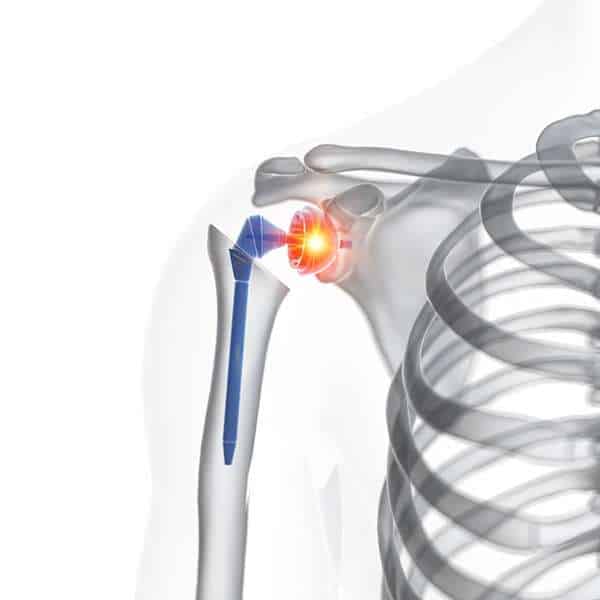
Total Shoulder Replacement involves removing both the ball and socket of the joint and replacing it with a polished metal ball attached to the stem and a plastic socket.
In Partial Shoulder Replacement, only the damaged ball is replaced with the new metal ball. The procedure is also known as stemmed hemi-arthroplasty.
Reverse shoulder replacement is done when patients have severe or complete damaged rotator cuff or previously failed shoulder replacement surgery.
People who frequently experience a mild or severe amount of pain in the shoulder area may need shoulder replacement surgery after consulting with a renowned joint specialist doctor like Dr. Hiren Patel. The patients may suffer from pain due to Osteoarthritis, shoulder dislocation, rotator cuff injury, fracture, osteonecrosis, rheumatoid arthritis, or other inflammatory disorders.
Such conditions limit the movement of the shoulder joint and even the slightest movement can cause an unbearable amount of pain. The pain reaches such a severity level that you can’t get a good night’s sleep and even can’t rest for a while. You may feel weakness in the shoulder joint due to loss of motion. If nonsurgical treatments like medications are not effective, the patient may need to undergo surgery.
If you are exploring the option of Shoulder Joint Replacement, let’s see the advanced shoulder arthroplasty surgery offered by PMG hospital.
The shoulder joint consists of a ball and socket. A ball is a round head of the upper arm bone that’s located into the shallow socket in the shoulder. The surgical procedure of shoulder replacement involves removing the damaged parts of the ball and socket and replacing them with artificial metal and plastic implants.
The type of surgery required would be determined by physical & X-ray or other imaging analysis methods. If not sure, you need surgery or not, Dr Hiren Patel is a great option to seek a second opinion in this regard. Once examined by the Orthopedic doctor ahmedabad and surgery is finalized, the shoulder replacement surgery takes several hours to perform.
Dr Patel will carefully remove the damaged parts and replace them with implants using advanced medical equipment available at PMG Hospital.
After the shoulder joint surgery is complete and successful, you’ll be moved to the recovery room where you’ll be monitored for several hours to recover from anesthesia. Most patients are able to eat and get out of bed after a day or two of the surgery. Even you may go home after two to three days of surgery if no complications arise.
You’ll leave the hospital with a sling that helps to support and protect your shoulder for the first 2 to 4 weeks. The staples at the wound will get removed after several weeks of the surgery. Total recovery from the shoulder replacement may take up to 6 weeks or more depending on several factors and may go through several follow up visits with the doctor before you can drive again.
PMG Hospital believes in putting patients’ welfare first. This is what distinguishes PMG hospital from the rest of the orthopedic hospitals for Joint replacement surgeries. We are dedicated to offering the best care and treatment using innovative equipment and the latest procedure. Moreover, our team has a profound affection for each and every patient.
Dr. Hiren Patel is one of Gujarat’s and India’s reputable joint replacement surgeons. Dr. Patel offers trusted consultation and the best to seek a second opinion from. He has solid experience performing over 8000+ surgeries on patients from Ahmedabad, Gandhinagar, Unjha, Mahesana, Vijapur, Visnagar, Kadi, etc.
Under his leadership, the PMG hospital has set strict standards and protocols to leave no stone unturned while treating our patients. Our goal is to ensure all our patients recover rapidly and get back to their healthy normal life as soon as possible. And that’s what makes PMG and Dr. Hiren Patel the best shoulder Replacement Surgeon in Ahmedabad and Gujarat.

joint Replacement Surgeon in Ahmedabad, Gujarat
FAQ
A candidate for total shoulder replacement is typically someone who experiences severe shoulder pain and stiffness that limits daily activities and doesn’t respond to other treatments. Common conditions that might lead to this surgery include:
Patients who haven’t found relief through medications, physical therapy, or less invasive procedures may consider total shoulder replacement. The decision is usually based on the level of pain, disability, and the impact on the patient’s quality of life.
Total shoulder replacement surgery involves removing the damaged parts of the shoulder joint and replacing them with artificial components to restore function and relieve pain. The procedure typically includes replacing the head of the humerus (upper arm bone) with a metal ball and resurfacing the socket (glenoid) with a plastic component.
The procedure of total shoulder replacement (TSR) generally follows these steps:
Preparation and Anesthesia: The patient is given anesthesia, either general (putting the patient to sleep) or regional (numbing the arm and shoulder area).
Incision: The surgeon makes an incision over the shoulder to access the joint. This incision can vary in length depending on the specific technique used.
Removal of Damaged Bone and Cartilage: The surgeon removes the damaged cartilage and bone from the humeral head and the glenoid socket.
Implantation: The surgeon inserts a metal ball attached to a stem into the humerus. The stem is often cemented into place. The glenoid cavity is resurfaced with a plastic socket, which may be cemented or press-fitted.
Closure: The surgeon closes the incision with sutures or staples and covers it with a sterile bandage.
Recovery: The patient is taken to a recovery area for monitoring. Post-surgery, the patient begins a rehabilitation program, including physical therapy, to regain strength and mobility in the shoulder.
The main difference between total shoulder replacement and partial shoulder replacement lies in the extent of the joint replacement and the components used:
Total Shoulder Replacement (TSR):
Partial Shoulder Replacement (PSR):
The choice between total and partial shoulder replacement depends on the extent of the damage to the shoulder joint and the specific condition being treated. An orthopedic surgeon will assess the patient’s condition and recommend the most appropriate procedure.
The Three types of implants for total shoulder replacement (TSR) vary based on the materials used, the design, and the fixation method. Here are the main types:
Yes, both shoulders can be replaced at the same time in a procedure known as bilateral shoulder replacement. However, this is less common than bilateral knee replacements due to the following considerations:
Complexity and Duration: Replacing both shoulders in a single surgery is complex and requires a longer surgical time, which can increase the risk of complications.
Recovery and Rehabilitation: Recovery from bilateral shoulder replacement can be challenging. Patients would need to manage their daily activities without the full use of both arms during the initial recovery period, making tasks such as dressing, eating, and personal hygiene more difficult.
Staged Approach: More often, shoulder replacements are done in stages, with the surgeries spaced several months apart. This allows the first shoulder to heal and regain strength before the second surgery, making the overall recovery process more manageable.
Health and Fitness: The decision to perform bilateral shoulder replacement at the same time depends on the patient’s overall health, fitness level, and ability to withstand a prolonged surgery and recovery period.